Book #15 Circle of Reign – by Jacob Cooper

I’ve been putting off doing this review on purpose.  This is one of those books I kind of hated at first, but by the end, I had to admit it had some good moments. Still, this might be the first review here where I’m not 90%+ positive in my reaction (maybe not even 50%).

That being said, let’s get down to it…

Circle of Reign, is Jacob Cooper’s first novel.  If you want the summary follow the link. It’s a bit too much for me to really explain concisely.  When I picked it up on Audible (it was a Daily Deal), I was intrigued by the concept of a new epic fantasy utilizing Light & Dark in a new way, and I had no idea it was a self published work.  I hold nothing against self published works, they simply aren’t my first choice when looking for books.  The reviews are generally glowing, and the first hour or so of listening was really exciting!  And then…it went downhill.

Don’t get me wrong, Cooper does create a complex new world.  He introduces a magic system and land that I do want to learn more about, but I’m just not sold on it.

First, as another reviewer put it, he’s just begging for an editor.  I just listened to the audio, so I didn’t see grammatical errors, but he occasionally uses words that just sound fancy and don’t fit.  Now, I have a decent vocabulary and I like a solid, complex vocabulary in books.  What Cooper does here makes it sound like he is honestly just trying too hard.  He also falls into the trap of creating a language…without creating a language. He includes complicated made up words and immediately explains them with the English. Yes this can be done effectively, but here it feels clunky and forced. Again, I attribute this to just trying too hard.

Second, character development is almost non-existent.  There is a brief effort with the two main characters, but I don’t feel like Cooper thinks of them as breathing creations, which characters should be to any author.

Third, the book tries to be as political as other major epic fantasy series, without actually bothering to delve into the politics much.  Everything feels skimmed, brushed, but never explored.  I saw a positive review that compares this book to Brandon Sanderson “except less nerdy and more gritty.”  Well, it’s grittier because it is rougher in both language and especially political plot…and can’t pull off the finesse of Sanderson or George R.R. Martin. Cooper definitely is influenced by the two of these authors.  However, Sanderson and Martin are all about complex plots, twists, political intrigue, and world disaster.  Cooper attempts to pull on these elements, but doesn’t quite succeed.

Still, I can’t be all negative. Though it took me a long time to force myself to read, by the last third of the novel, I didn’t want to put it down. Yes, part of that was because I knew I was nearing the end, but I also got wrapped up in the action.  Here Cooper starts to hint at a larger mythology, and he starts to build a battle scene that could rival other epic fantasy battles.  In the end, I felt like it was a let down and a bit predictable. I am curious to see what happens next, but if he doesn’t get an editor or a mentor on his writing style, I don’t know if I can put myself through another book.  It’s actually sad because Cooper really has the basic blocks to what promises to be a great concept/world/story.  The execution is just lacking.  However, I’m glad other people have latched onto it. His creativity certainly needs to be lauded even if he isn’t very polished.  I hope he improves and succeeds eventually, but I do suggest you go into the book only if you can look past the rougher edges.

And that’s all I’ve got!
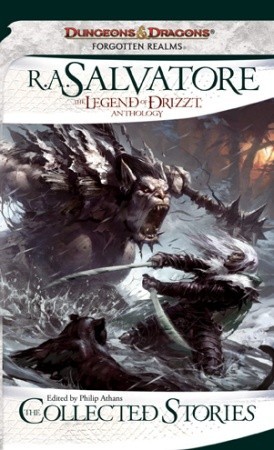
Book #11 – The Legend of Drizzt: The Collected Stories, by R.A. Salvatore

This review will be short and sweet, just like one of these collected stories! Okay…they’re short…but not sweet.  I mean, they’re perfectly good stories, but anything by Salvatore is pretty action packed with little time for what I would call “sweet.”

I’ve never read R.A. Salvatore before this, but I’ve seen his name and books all over the place.  He’s pretty much a standard in the fantasy writing world, especially for anyone who may play Dungeons & Dragons. He pretty much invented the Dark Elf hero (aka Drizzt).  If you’ve ever played a game of D&D or World of Warcraft, these books might be up your alley.

The collected stories are probably better suited for anyone who has read the series since these pieces follow main characters or link to big plot lines.  However, I picked it up as a free Audible deal thinking it might be a good intro to the series without too much of a commitment on my part. PLUS, the audiobook is read by various celebrities: Felicia Day, David Duchovney, Weird Al, Danny Pudi, Wil Wheaton, etc.

It certainly served as a good introduction, and it was a lighthearted change from my normal fair; a good break in between the longer texts where I usually live.  The readers were great for the most part, though sometimes celebrities just shouldn’t read audio books (I’m talking to you Ice-T…seriously).  Wil Wheaton was phenomenal as a reader, and he certainly had one of the BEST stories to display is range.  Having played D&D myself, I also really felt like one of our late night campaigns had come to life in Salavatore’s work. In that regard he succeeds!

On the other hand, it’s really just not my type of book.  No real depth or character development, and yes, I realize these are short stories so that happens.  But the battles, monsters, action tales, while good for a late night role playing campaign with a bunch of friends and some D20s aren’t really what I consider my ideal reading. I like more “uumph” more “meat” more…”MORE.”  I definitely recommend these books for a certain audience. They are fun, well written, and extremely detailed.  However, the introduction is probably enough for me.

Though I kind of miss playing D&D now…

Top Ten Books Recently Added to My TBR List

8a00a-toptentuesdayI’ve been off my writing game lately. Busy week/weekends, work, and life all distract. I even passed on last week’s Top Ten! For Shame!!  So, briefly, I’ve compiled this week’s list from The Broke & The Bookish which is Ten Books recently added to my TBR List. I’d love to hear your suggestions!

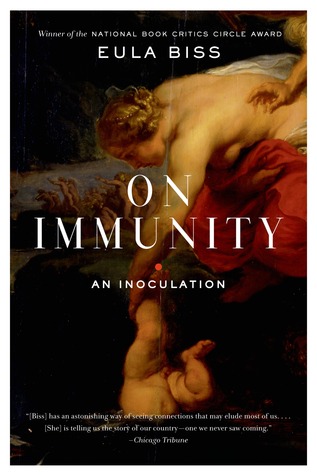
1.  On Immunity: An Inoculation, by Eula Biss.  I just picked this audiobook up on a whim, so it will be one of my next listens.  She has good reviews for what appears to be a well rounded discussion/argument for vaccines.

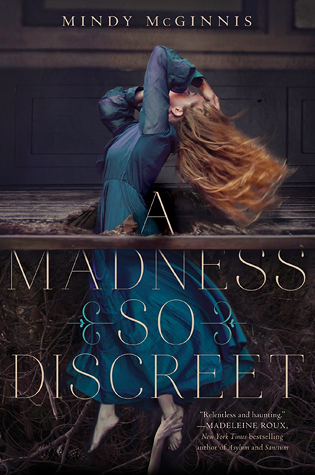
2.  A Madness So Discreet, by Mindy McGinnis. Historical Fiction Thriller set in 1890 following a main character struggling with her own sanity. McGinnis’ book isn’t out until the fall, and I cannot wait!  Plus, look at that lovely cover art!

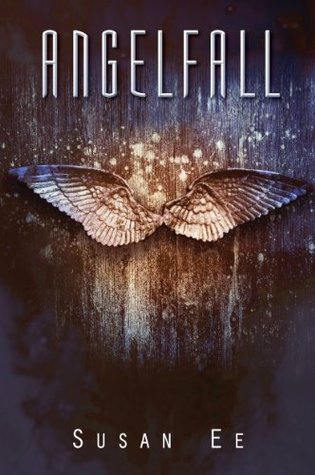
3.  Angelfall (Penryn & the End of Days Book #1), by Susan Ee.  Another blogger recommended this series to me and warned me not to be put off by the angels.  Since I love post-apocalyptic fiction, I decided to listen to her suggestion!

4.  Partials (Partials Sequence #1), by Dan Wells.  More Post-apocalyptic YA and another blogger recommended read.  The blurb had me at “for fans of The Hunger Games, Battlestar Galactica, and Blade Runner.”  It piqued my interest further with the concept of war between humans and genetically engineered beings.

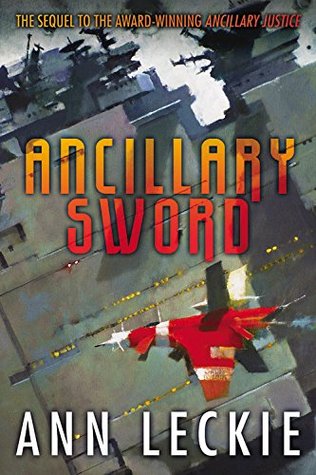
5.  Ancillary Sword (Imperial Radch #2), by Ann Leckie.  I just finished the first one in this series, and I can safely place it somewhere in my all time favorite top ten books.  Good sci-fi with themes of culture, identity, social norms, and gender.  I’m looking forward to the second with the third due out sometime this year.

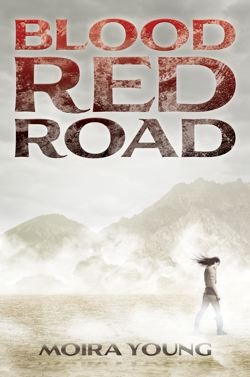
6.  Blood Red Road (Dust Lands Trilogy #1), by Moira Young.  More post-apocalyptic fiction with strong female characters. I’ve had two different people recommend this book to me recently, so it should probably be tackled sooner rather than later.

7.  Sex at Dawn: The Prehistoric Origins of Modern Sexuality, by Christopher Ryan & Cacilda Jetha.  Yes, this one totally switches gears! I love studying gender, relationships, and how/why we are built the way we are.  After a good discussion with one of my friends, she told me about this book which she too had just put on her To Be Read list.

8.  Shift (Silo #2), by Hugh Howey.  I reviewed Wool about a month ago. This is the follow up, though it is more of a prequel.  I already have the audiobook, so it’s just a matter of time before I listen to it.

9.  The Good House, by Tananarive Due.  This was one of those “on a whim” purchases on Audible (it was on sale). It looks good though! Supernatural thriller…haunted house…good reviews…I’m in!

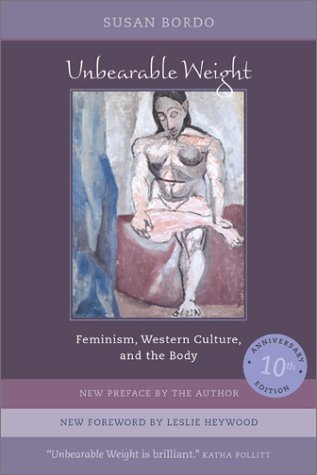
10.  Unbearable Weight: Feminism, Western Culture, & the Body, by Susan Bordo.  I’ve read selections from this book. Correction, I’ve TAUGHT a selection from this book.  However, I am ashamed to say I’ve never read it! I forgot about this one until recently, and so, I’m making it my goal to read it before the year is out! Bordo always has a good way of analyzing culture and the body, both male and female.

Book #9 – Rebel Angels, by Libba Bray

Since I took so long to complete the 4 reviews for the rest of my February books, I ended up filling some of my reading with somewhat lighthearted fair. After Wool, I couldn’t delve quickly into something very complex (just too many thoughts). So, I read Libba Bray’s second book in the Gemma Doyle series, Rebel Angels.  That statement may, in fact, be a bit misleading since the world of Gemma Doyle is actually a bit complex, if not the deepest.  What I really love is that Bray has some of the loveliest blending of history and fantasy I have ever come across.

The basic premise for the series is as follows:  Gemma Doyle is a 16 year old girl living in India with her family in 1895.  After her mother’s mysterious death, the family returns to England and Gemma is shipped off to Spence, a girl’s boarding school.  Once there, she must deal with strange visions, a mysterious boy following her, and of course the social society of teenage girls.  Magic and tense friendships send her on a strange journey to understand who she is and the legacy her mother left her.

I cannot praise Bray enough as an author, and I’ve really just dipped my toes into her works.  However, since the Gemma Doyle series is her first full series, some of it is a bit rough around the edges. I loved book #1, A Great and Terrible Beauty, with it’s very well researched Victorian setting, ties to India, and mythical, mysterious, magical Realms.  Plus, I LOVE it when I can’t quite see all the twists coming (keep me guessing guys, it’s way more entertaining that way).

Rebel Angels, book #2, picks up where book #1 ends with only a short gap of time, and unfortunately it seemed stretched a bit thin at parts (specifically where the magic is involved).  Regretfully, I also saw the twist coming from approximately page 10.  I was actually angry when my suppositions ended up being the supposed “twist.” Sometimes, it’s okay, because the author has kept me guessing even if I see the twist, or “think” I see it.  That didn’t happen here.

Despite that, I still recommend Rebel Angels.  I’ll be starting Book #3 sometime in the near future, so I can see if she strengthens anything there. I know part of the problem with the series is because it is her first.  Diviners is just plain amazing, so it’s nice to see her depth and style develop.
On a side note, if you’re bored, go read Libba Bray’s bio on her website. It just makes me happy…

Ten Books for Readers Who Like “Female Action/Heroines/Dystopian” topics (ie Hunger Games)

Another Top Ten Tuesday brought to us by The Broke and the Bookish.  How I love them so! I’ll admit though, that this week’s Top Ten is a bit of a challenge. For Readers Who Like….a certain Genre? A certain Character? A specific book/series? Yogurt? I dunno…the possibilities are endless (though I doubt I can recommend books based on Yogurt).

I’m going to bite the bullet and go the easy route, since this is only my second “Top Ten Tuesday” list.  Therefore let me present:

The Top Ten Books for Readers Who Like:

Let me clarify a bit before we get to the list.  These are Dystopian or female-action oriented reads. It’s all about the heroines kicking ass.   Honestly, we could leave the Dystopia out of it!  I chose this, because it’s been on my mind lately, and because, though I enjoy The Hunger Games trilogy, I get bogged down by the end (in other words, I HATE IT), and I think there are other books out there tackling the subject matter in better ways. So, enjoy. Tell me what you think! Any others you think should also be included? I’m certainly not an expert, and I know there are tons out there that I have yet to read.

1-3.   The Graceling Realm Trilogy by Kristin Cashore (Graceling, Fire, & Bitterblue).  I have to include the entire series, because they are just that good.  It isn’t a Dystopian series but the heroines are all strong, realistic characters (book two even features a female archer).  It is action oriented, in a broken world, with strong character development, and of course, romance.  Cashore’s heroines deal with relationships in a decidedly more adult and less trivial manner than many young adult books treat love (including Hunger Games).  She provides alternative ideas of what expectations a person should have in a relationship, and her characters are well rounded and ever evolving.  Of course, you also have the battle for freedom, rebellion, and some intense dark moments throughout the three stories. Really, I can’t recommend the series enough.

4.  Wool, by Hugh Howey.  I just reviewed this book, so of course it’s at the front of my mind.  Howey creates an amazing and mysterious Dystopian world in his Silo Saga.  I’ve only read book #1, so I can’t speak to the rest of the series, but it boast a strong female character who is logical, intelligent, determined, and strong.  It has rebellion, and truth seeking, and yes, a little romance.  One of the best Dystopian books I’ve ever read.

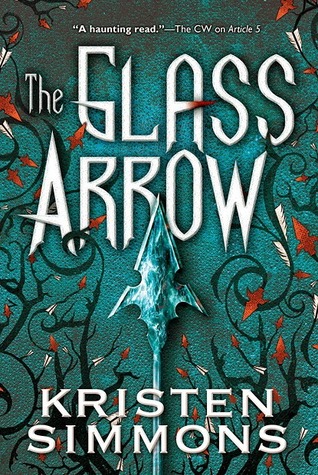
5.  The Glass Arrow, by Kristen Simmons.  

Okay, I can’t REALLY  recommend this one since I only just bought it and haven’t read it but come on…it looks like it will fit and I can’t WAIT to start. Seriously, the only reason I haven’t opened it up yet is because I have to finish this book club book first.  Just read this (and the rest of the description) and you’ll understand: The Handmaid’s Tale meets Blood Red Road in Glass Arrow, the story of Aya, who lives with a small group of women on the run from the men who hunt them, men who want to auction off breeding rights to the highest bidder.”

6-9. The Song of the Lioness quartet by Tamora Pierce. Really, you could count ANYTHING by Pierce. I also recommend Wild Magic from The Immortals quartet, which directly follows the events of the first series. They are for a slightly younger reader, but all of them have strong female heroines who we watch grow up throughout the series.  Alanna, our main heroine, must hide her gender and true talents, battle her way into becoming a respected knight, and help save her kingdom from upheaval.  All of this of course takes place while she is turning into a woman and trying to decide who and how to love.  Yes, we get a love triangle here, but it doesn’t bother me like the whole Peeta/Gale debacle.  Also, the relationships are realistic: troubled but not over-dramatized, physical as well as emotional. And her choices might just surprise you.

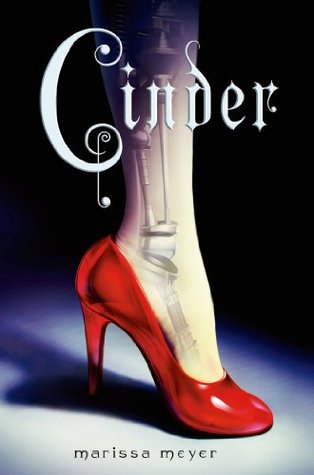
10.  Cinder and the entire Lunar Chronicles, by Marissa Meyer (though I can’t vouch yet for Fairest and Winter isn’t out until November).  Back to Dystopian fiction here, though really it’s just straight sci-fi and not a Dystopia. Meyer writes an entirely addicting series.  We have a futuristic world with yes, fairytales, and our Cinderella is, of course, a cyborg (part human/mechanical-tech parts…not to be confused with AI or full robot from other futuristic tales).  We have romance, action, and even a bit of a whining heroine. Really though, the little bit of whining, which is expected with Cinderella in my opinion, is my only complaint. I started to get annoyed with the romantic story, but Meyer fleshed it out so startling well and realistically in Scarlet and Cress (yes also fairy tales), that it has become one of my favorite examples of HOW you do romance in fiction (nearly up there with Cashore).

If I Were a Book Character I Would Be…

How could I forget World Book Day?! How?!  Something must be wrong in my head…Thankfully, it doesn’t matter that much since I pretty much make it a point to honor books and their influence on my life each and every day. Therefore, it’s never too late to have a little bit of fun!

Over on The Bookie Monsters, Tash shared a short and sweet post about the character she would choose to be (Matilda, FYI which I totally love).  So, why not join in?

If I were any book character I would be:

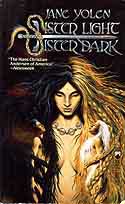
Jenna from Sister Light, Sister Dark and White Jenna, by Jane Yolen.

sisterlsdIf you’ve read any of my (very few) posts, I have mentioned these books multiple times, so this shouldn’t be surprising. They were such a formative part of my youth, especially of my reading identity, or for my entire identity really.

The main reasons I would love to be Jenna are:

First and foremost, she kicks ass.  She is young when this prophecy is thrust upon her, and though she is not necessarily the “go conquer the world” girl, she is about protecting her people and writing the wrongs of the land.  Basically, she’s an Amazonian princess. Think Xena, but less cheesy.

I’ll admit, I wanted to BE Xena as a kid. I didn’t crave the clothes really, but I did love how she was a tough woman beating down all the slimy guys around her. And no, I’ve not turned out to be a man hater.  Perhaps this is why Jenna resonates with me so.  In an all female society, she does not hate men like many around her or become the doting housewife. Yolen makes Jenna into someone who wants, deserves, and ultimately finds an equal partner to fight alongside her, save the kingdom with, and eventually rule with her.

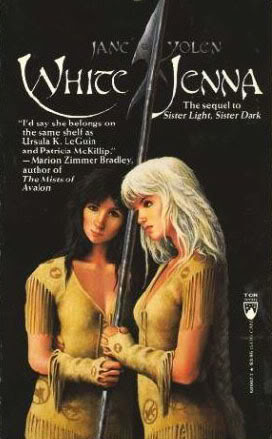
The second reason I would love to be Jenna is because of her shadow sister, her “sister dark,” Skada, who can only appear at night by moonlight or lamplight in the shadows.

whitejenna

Seriously, I just love the 80s art work! I know there are two other editions now, but *sigh* I can’t get enough of these original covers.

This is the magic of the Dales, of the women who raised Jenna, who can call forth these shadow halves. For an only child, it was powerfully alluring.  I always wanted a sister.  To be able to have a partner in crime that is nearly a second skin still sounds wonderful. (I mean, I’ve gotten close with my husband but still…).

Wrap all of this together with the songs, legends, history, and folklore that ties the main tale together, and it is a world I would not mind experiencing.  I’m only sad to see some reviews of these books aren’t that positive (ehem, Goodreads), so maybe it doesn’t hold up that well. But for me, being White Jenna with her sister Skada, is still a dream, and a clear explanation of who I have indeed become in the real world. Yolen made magic happen for me. So Jenna will remain part of my shadow self forever.

Book #3-The Wise Man’s Fear by Patrick Rothfuss

It should be stated somewhere that you can tell how much a book has gripped you by how fast you power through the audiobook version.  42 freaking hours!!!! Yes, that is the length of the audiobook version of my third book for 2015. Usually, listening is reserved to drive time (about 1 hour/day) and sometimes cooking.  So, a 42 hour book should take me over a month to complete…obviously, this is NOT the case here. I started it after Christmas and could not stop listening which lead me to finish it in about 3 weeks!  This phenomenal book is, of course, Patrick Rothfuss’ The Wise Man’s Fear.

wise_mans_fearThe Wise Man’s Fear is Day Two of The Kingkiller Chronicles, the first in the series being The Name of the Wind which I finished back in November. I’ll try to limit the spoilers in the following review.

cover_277The series follows the the story of Kvothe (pronounced quothe with one syllable).  As an adult, he is hiding as Kote, a simple innkeeper, but his life is legendary.  Chronicler, a scribe, uncovers who he is and requests to hear the entire true story.  Kvothe obliges, promising to tell his story over the course of three days. Each book is therefore set as ONE day of the story, and occasionally shuffles back and forth between the past (narrated by Kvothe) and the present period in the “quiet” inn.

The Name of the Wind follows Kvothe’s boyhood as one of the Edema Rue (troupers that perform plays and music) into his turbulent youth after the slaughter of his family and his eventual admittance into The University a couple of years later, where he studies arcane magics, science, letters, etc.  His talent and quick wit are as great at getting him into trouble as they are at getting him out of it.  The story is one of an impatient and clever boy making his way in a world where he normally would have little access.

While book one is very much a coming of age story, The Wise Man’s Fear steps into the realm of adult problems (even if he still is only a teenager throughout).  Kvothe continues studying at The University, only to have problems cause him to leave.  He adventures into Vintas, another nation, to work for Maer Alveron, the man who is richer than the King of Vint.  What follows are several adventures: chasing bandits, entering the Faen Realm, learning the secret art of the Adem mercenaries, and his eventual return to The University.

My vague and stilted summary aside, this series not only contains magic, it is magic.  Rothfuss creates a world that is comprehensive, alive, and teaming with possibility.  Kvothe is believable both in his likeability as well as in his obvious faults.  The author does not shy away from making his hero real and imperfect.  After all, he is still just a boy, a young man, and we know from the start that there must be a truth behind the legends.

I’ll admit that in Book One, I struggled with the lack of a strong female character. For as long as I can remember, I’ve focused in on the female-centric stories (I blame my mother…and Jane Yolen).  So, I started to assume Rothfuss was the stereotypical fantasy author focusing on a male hero.  Book Two proved to me why I should not be so gender specific in my literary choice.  Though Kvothe is the central character, Rothfuss supports him with a wide cast, and many of his teachers, leaders, mentors, and friends are women.  For me, I enjoy seeing such believable characters, treated primarily as people, not just as gender specific stereotypes.  We don’t need an “Amazonian Princess” to have strong women and we don’t need a “Hercules” to have strong men (yes, I’m simplifying things here, but you get the point).  Rothfuss’ world is the way I wish most people created characters (especially on TV and in Film): As primarily, verily, HUMAN.

Besides this incredible character creation and vibrant world, Rothfuss spoke to my heart with one other aspect: music.  Kvothe’s deepest love is song. He plays the lute like it is his very soul, and the tender detail in which Rothfuss describes the feel of the music, the joy and pain in playing, shows that the author is a musician himself, or has immersed himself in music enough to understand.

I’m a sucker for language, and it is this experiential phrasing that has me hooked on Rothfuss. Now, like the rest of his fans, I have to wait for Day Three and whatever remains beyond.