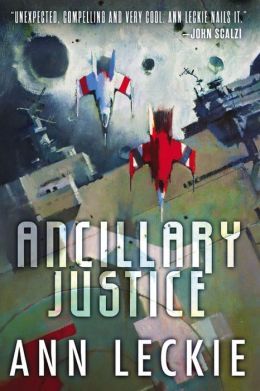
Book #12 – Ancillary Justice, by Anne Leckie (or Guess Who Found a New Favorite Book)

Another winning recommendation from Annie.  Anne Leckie’s Ancillary Justice deserves all the awards and commendations it has received and then some. It won’t be up everyone’s alley, but for me, I can easily put it in my top dozen favorite reads.

Briefly, Leckie’s website summarizes the book as follows:

On a remote, icy planet, the soldier known as Breq is drawing closer to completing her quest.

Breq is both more than she seems and less than she was. Years ago, she was Justice of Toren–a colossal starship with an artificial intelligence linking thousands of corpse soldiers in the service of the Radch, the empire that conquered the galaxy.

An act of treachery has ripped it all away, leaving her with only one fragile human body. And only one purpose–to revenge herself on Anaander Mianaai, many-bodied, near-immortal Lord of the Radch.

Basically we have an epic, lovely space opera with a militaristic society, complex AI, and an absence of gender (as we see it).  Breq and the entire Radch society only use feminine pronouns (she, her, sister, daughter, etc.).  Now, there are indeed different sexes, but it simply does not matter to the main civilization. It is only through interactions of other races that gender becomes an issue (really more of an issue of propriety but little else).

Special Edition Artwork by Lauren Saint-Onge

Now, you may think this means the entire novel is about gender, but really it is more powerful that gender isn’t an issue at all.  Leckie’s real power is her storytelling, her ability to create a complex society within a detailed universe seemingly thousands of years old filled with developed characters who struggle with their own sense of identity and purpose and the morality of their choices.  She tackles really deep existential concepts, that moment of self-awareness and “becoming,” and she does so artfully for both the more advanced as well as the common reader of sci-fi.  In the end, gender doesn’t matter to what is an overall incredible and meaningful story.

These themes of identity, meaning, and morality are what stand out to me the most.  Of course, the single gender pronoun grabbed me and the concept presents great ideas for discussion, but Breq (or Justice of Toren) is more importantly an example of self-reflection and growth, of facing down destiny, and of learning how we can operate as individuals as well as part of a community (and how important both things are).

I’m not sure any of this makes sense unless you delve into Ancillary Justice.  For me, it took me back to some of my favorite philosophical discussions, and I hope my saying so doesn’t deter potential readers. Leckie’s work just hit me that hard.  I will be reeling from it for months and years.  If you like well written sci-fi, you’ll enjoy this book.  After all, there is a reason Ancillary Justice is the first book to receive all three major awards-The Hugo, Nebula, and Arthur C. Clarke awards-for Best Novel.

Book #10 – The Handmaid’s Tale, by Margaret Atwood

It should be no surprise to anyone that I’m writing about this book.  It should surprise you that it has taken me this long into my life to actually read Atwood. What have I been doing with the last 30 years of my life?!
The Handmaid’s Tale is one of those landmark texts, the kind that generations upon generations of inspired readers share, handing you their well loved, worn copy. Looking at you with gleaming, affected eyes, they eagerly push the book into your hand with a smile that reads of change and opened minds.

Maybe I’m being too sentimental and overselling Atwood.  Still, my point is that The Handmaid’s Tale was written with an important purpose, and 30 years later it still excels at that purpose. (Well I’ll be damned…I just realized that this year is the 30th anniversary of the book…huh…perfect!).

The premise is as follows:

In the not so distant future, the United States has erupted into a completely different world known as Gilead.  In response to increasing liberalism, feminist movements, changing views on religion, etc., Gilead has restructured the entire nation, issued total control over the remaining society, and outlawed anything and everything from women in the workplace to wearing makeup to printing books,  Only one state religion is allowed and women possess only 3 jobs: Wife, Martha, or Handmaid (though you could count the Aunts as a fourth, but they’re an extension of the Handmaid).  Women exist to serve their roles as related to their house and man. This is how they contribute to the greater good of society.

Atwood focuses on the Handmaid, Offred (Literally Of Fred). Most of her days are spent alone, in silence. She is not allowed to read. She leaves the house once a day to purchase food at the market.  Monthly she goes through the Ceremony where she has sex with the Commander (aka Fred), hoping to conceive by him. Offred is one of the valuable women who still have viable ovaries in this transitional society. If she cannot conceive, she will be deemed worthless.

First Edition Cover (source Wikipedia)

Atwood fills Offred’s days with monotony, reflections on her life as it as, and dreams of her life before. We are given glimpses of her lost hopes, her missing family, the horrors of the transition into the Handmaid’s role, and her struggles in her current household where she just wants to survive a little longer. She can barely even hope to find a way out. The story is structured to make us feel the sluggish, oppressive, passing of time, the tense fear of committing the slightest sin. The whole society, not just women, are controlled and stifled to an extreme.

In the extremeness of her story, Atwood creates a lens through which we can critique our current culture.  The world of Gilead is just a funhouse mirror version of our own, twisted, curved and quite cracked.  Still, its basic structure comes from our world’s very real issues with gender roles (male as well as female), religious influence, political power, and the domestic space of the home.  The norm of the world is a blanket we wrap around ourselves.  Atwood’s ability to tear it away through her close scrutiny is why The Handmaid’s Tale remains a phenomenal unconquerable text.

Obviously, I’ve touched on perhaps my favorite discussion point, so I’ll share a few texts below if you’re interested in further reading. Many more exist, but these are ones I’ve found particularly enlightening.

Of Woman Born: Motherhood by Experience, by Adrienne Rich.*                  *This one above all closely relates to Atwood’s work.

The Feminine Mystique, by Betty Friedan.

The Second Sex, by Simone de Beauvior.

Sexual Politics, by Kate Millett.

I’d love to hear your thoughts or any books, articles, (non-fiction or fiction), you would like to share!

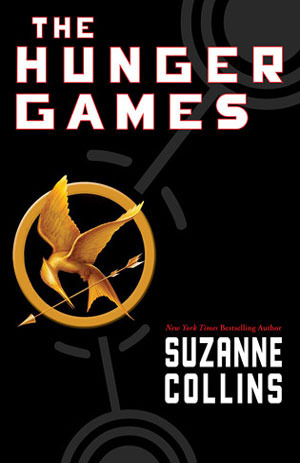
Ten Books for Readers Who Like “Female Action/Heroines/Dystopian” topics (ie Hunger Games)

Another Top Ten Tuesday brought to us by The Broke and the Bookish.  How I love them so! I’ll admit though, that this week’s Top Ten is a bit of a challenge. For Readers Who Like….a certain Genre? A certain Character? A specific book/series? Yogurt? I dunno…the possibilities are endless (though I doubt I can recommend books based on Yogurt).

I’m going to bite the bullet and go the easy route, since this is only my second “Top Ten Tuesday” list.  Therefore let me present:

The Top Ten Books for Readers Who Like:

Let me clarify a bit before we get to the list.  These are Dystopian or female-action oriented reads. It’s all about the heroines kicking ass.   Honestly, we could leave the Dystopia out of it!  I chose this, because it’s been on my mind lately, and because, though I enjoy The Hunger Games trilogy, I get bogged down by the end (in other words, I HATE IT), and I think there are other books out there tackling the subject matter in better ways. So, enjoy. Tell me what you think! Any others you think should also be included? I’m certainly not an expert, and I know there are tons out there that I have yet to read.

1-3.   The Graceling Realm Trilogy by Kristin Cashore (Graceling, Fire, & Bitterblue).  I have to include the entire series, because they are just that good.  It isn’t a Dystopian series but the heroines are all strong, realistic characters (book two even features a female archer).  It is action oriented, in a broken world, with strong character development, and of course, romance.  Cashore’s heroines deal with relationships in a decidedly more adult and less trivial manner than many young adult books treat love (including Hunger Games).  She provides alternative ideas of what expectations a person should have in a relationship, and her characters are well rounded and ever evolving.  Of course, you also have the battle for freedom, rebellion, and some intense dark moments throughout the three stories. Really, I can’t recommend the series enough.

4.  Wool, by Hugh Howey.  I just reviewed this book, so of course it’s at the front of my mind.  Howey creates an amazing and mysterious Dystopian world in his Silo Saga.  I’ve only read book #1, so I can’t speak to the rest of the series, but it boast a strong female character who is logical, intelligent, determined, and strong.  It has rebellion, and truth seeking, and yes, a little romance.  One of the best Dystopian books I’ve ever read.

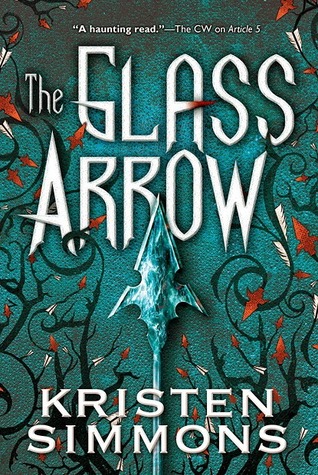
5.  The Glass Arrow, by Kristen Simmons.  

Okay, I can’t REALLY  recommend this one since I only just bought it and haven’t read it but come on…it looks like it will fit and I can’t WAIT to start. Seriously, the only reason I haven’t opened it up yet is because I have to finish this book club book first.  Just read this (and the rest of the description) and you’ll understand: The Handmaid’s Tale meets Blood Red Road in Glass Arrow, the story of Aya, who lives with a small group of women on the run from the men who hunt them, men who want to auction off breeding rights to the highest bidder.”

6-9. The Song of the Lioness quartet by Tamora Pierce. Really, you could count ANYTHING by Pierce. I also recommend Wild Magic from The Immortals quartet, which directly follows the events of the first series. They are for a slightly younger reader, but all of them have strong female heroines who we watch grow up throughout the series.  Alanna, our main heroine, must hide her gender and true talents, battle her way into becoming a respected knight, and help save her kingdom from upheaval.  All of this of course takes place while she is turning into a woman and trying to decide who and how to love.  Yes, we get a love triangle here, but it doesn’t bother me like the whole Peeta/Gale debacle.  Also, the relationships are realistic: troubled but not over-dramatized, physical as well as emotional. And her choices might just surprise you.

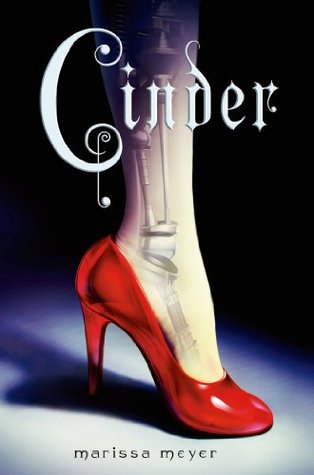
10.  Cinder and the entire Lunar Chronicles, by Marissa Meyer (though I can’t vouch yet for Fairest and Winter isn’t out until November).  Back to Dystopian fiction here, though really it’s just straight sci-fi and not a Dystopia. Meyer writes an entirely addicting series.  We have a futuristic world with yes, fairytales, and our Cinderella is, of course, a cyborg (part human/mechanical-tech parts…not to be confused with AI or full robot from other futuristic tales).  We have romance, action, and even a bit of a whining heroine. Really though, the little bit of whining, which is expected with Cinderella in my opinion, is my only complaint. I started to get annoyed with the romantic story, but Meyer fleshed it out so startling well and realistically in Scarlet and Cress (yes also fairy tales), that it has become one of my favorite examples of HOW you do romance in fiction (nearly up there with Cashore).

Book #8 – Wool: Omnibus (Silo #1) by Hugh Howey

Well, I promised to get caught back up on the books I’ve finished this last month and here I am!  I can’t think of a better place to start than with perhaps one of the best pieces of dystopian fiction to emerge in recent years.  The popularity of Hunger Games started a surge on the market of dark, futuristic worlds where “ordinary folk turned heroes” fight for justice, equality, etcetera, etcetera…I’ve always enjoyed dystopian tales, so I’m OK with this trend.  However, as with all fads, the true gems of the bunch are few and far between.  Wool by Hugh Howey is one of these diamonds.
Howey started this series as a novelette, self published on Amazon. It received such high praise that fans clamored for more, and the book was born.  Wool is actually a collection of these first 5 short stories and is book #1 in the Silo Saga (you can rest assured I’ll be reading the other two soon enough!).  The 5 stories tie together into one nearly seamless tale about living within the strict boundaries of a highly controlled society. When those rules are challenged, and the the lies that built them addressed, everything and everyone must either change or ultimately be destroyed.

Without giving too much more away, the story is essentially set on Earth, sometime in the distant future, where society lives underground after some unknown long-ago disaster destroyed everything on the surface and filled the air with toxic chemicals.  This space underground is a huge silo, 144 floors deep.  Every once and a great while, someone breaks the law by saying they want to go outside. They are sent outside to Cleaning, an act in which they clean the sensors/cameras on the top of the silo (which give the upper levels a view of the bleak landscape outside) and summarily die from exposure (even in their cleaning suits).  One Cleaning sets a series of events into motion which bring the lies to the surface and the Silo to it’s knees.

Art by Jasper Scheurs

The dystopian idea of people left to survive underground indefinitely is a great sociological exercise. Howey uses this experiment to his advantage to explore how society and culture is constructed or created; how the pieces work together but eventually wear around the edges to create gaps.  What happens when the entire world is built on falsehoods? Who do you trust and how do you deal with the sudden confrontation of this altered world?

Character development in Wool is also very solid. You probably know by now, I’m big into strong, or at least realistic, female heroes.  Howey succeeds at this as well.  Jules is a wonderful character: strong, believable, and vulnerable in the right ways.  She is a born leader with clear morals and beliefs about building and maintaining her community. Her rise, fall, and dangerous adventures in the silo unite all the stories. Jules is the vehicle for change who is believable for her imperfections as well as her honorable actions.

In the end, go read this book. It may stand for a long time near the top of my favorite books.

Book #3-The Wise Man’s Fear by Patrick Rothfuss

It should be stated somewhere that you can tell how much a book has gripped you by how fast you power through the audiobook version.  42 freaking hours!!!! Yes, that is the length of the audiobook version of my third book for 2015. Usually, listening is reserved to drive time (about 1 hour/day) and sometimes cooking.  So, a 42 hour book should take me over a month to complete…obviously, this is NOT the case here. I started it after Christmas and could not stop listening which lead me to finish it in about 3 weeks!  This phenomenal book is, of course, Patrick Rothfuss’ The Wise Man’s Fear.

wise_mans_fearThe Wise Man’s Fear is Day Two of The Kingkiller Chronicles, the first in the series being The Name of the Wind which I finished back in November. I’ll try to limit the spoilers in the following review.

cover_277The series follows the the story of Kvothe (pronounced quothe with one syllable).  As an adult, he is hiding as Kote, a simple innkeeper, but his life is legendary.  Chronicler, a scribe, uncovers who he is and requests to hear the entire true story.  Kvothe obliges, promising to tell his story over the course of three days. Each book is therefore set as ONE day of the story, and occasionally shuffles back and forth between the past (narrated by Kvothe) and the present period in the “quiet” inn.

The Name of the Wind follows Kvothe’s boyhood as one of the Edema Rue (troupers that perform plays and music) into his turbulent youth after the slaughter of his family and his eventual admittance into The University a couple of years later, where he studies arcane magics, science, letters, etc.  His talent and quick wit are as great at getting him into trouble as they are at getting him out of it.  The story is one of an impatient and clever boy making his way in a world where he normally would have little access.

While book one is very much a coming of age story, The Wise Man’s Fear steps into the realm of adult problems (even if he still is only a teenager throughout).  Kvothe continues studying at The University, only to have problems cause him to leave.  He adventures into Vintas, another nation, to work for Maer Alveron, the man who is richer than the King of Vint.  What follows are several adventures: chasing bandits, entering the Faen Realm, learning the secret art of the Adem mercenaries, and his eventual return to The University.

My vague and stilted summary aside, this series not only contains magic, it is magic.  Rothfuss creates a world that is comprehensive, alive, and teaming with possibility.  Kvothe is believable both in his likeability as well as in his obvious faults.  The author does not shy away from making his hero real and imperfect.  After all, he is still just a boy, a young man, and we know from the start that there must be a truth behind the legends.

I’ll admit that in Book One, I struggled with the lack of a strong female character. For as long as I can remember, I’ve focused in on the female-centric stories (I blame my mother…and Jane Yolen).  So, I started to assume Rothfuss was the stereotypical fantasy author focusing on a male hero.  Book Two proved to me why I should not be so gender specific in my literary choice.  Though Kvothe is the central character, Rothfuss supports him with a wide cast, and many of his teachers, leaders, mentors, and friends are women.  For me, I enjoy seeing such believable characters, treated primarily as people, not just as gender specific stereotypes.  We don’t need an “Amazonian Princess” to have strong women and we don’t need a “Hercules” to have strong men (yes, I’m simplifying things here, but you get the point).  Rothfuss’ world is the way I wish most people created characters (especially on TV and in Film): As primarily, verily, HUMAN.

Besides this incredible character creation and vibrant world, Rothfuss spoke to my heart with one other aspect: music.  Kvothe’s deepest love is song. He plays the lute like it is his very soul, and the tender detail in which Rothfuss describes the feel of the music, the joy and pain in playing, shows that the author is a musician himself, or has immersed himself in music enough to understand.

I’m a sucker for language, and it is this experiential phrasing that has me hooked on Rothfuss. Now, like the rest of his fans, I have to wait for Day Three and whatever remains beyond.

Bookshelf Scavenger Hunt

I couldn’t help myself, the Bookshelf Scavenger Hunt I saw over on bluchickenninja looked like too much fun, so here it goes!

Find an author’s name or title with the letter Z:

WorldWarZ

Of course it had to be World War Z by Max Brooks. Wonderful commentary on humanity through the use of zombies and a smart example of oral history (even if it is fictional).

Find a classic:

JaneEyre

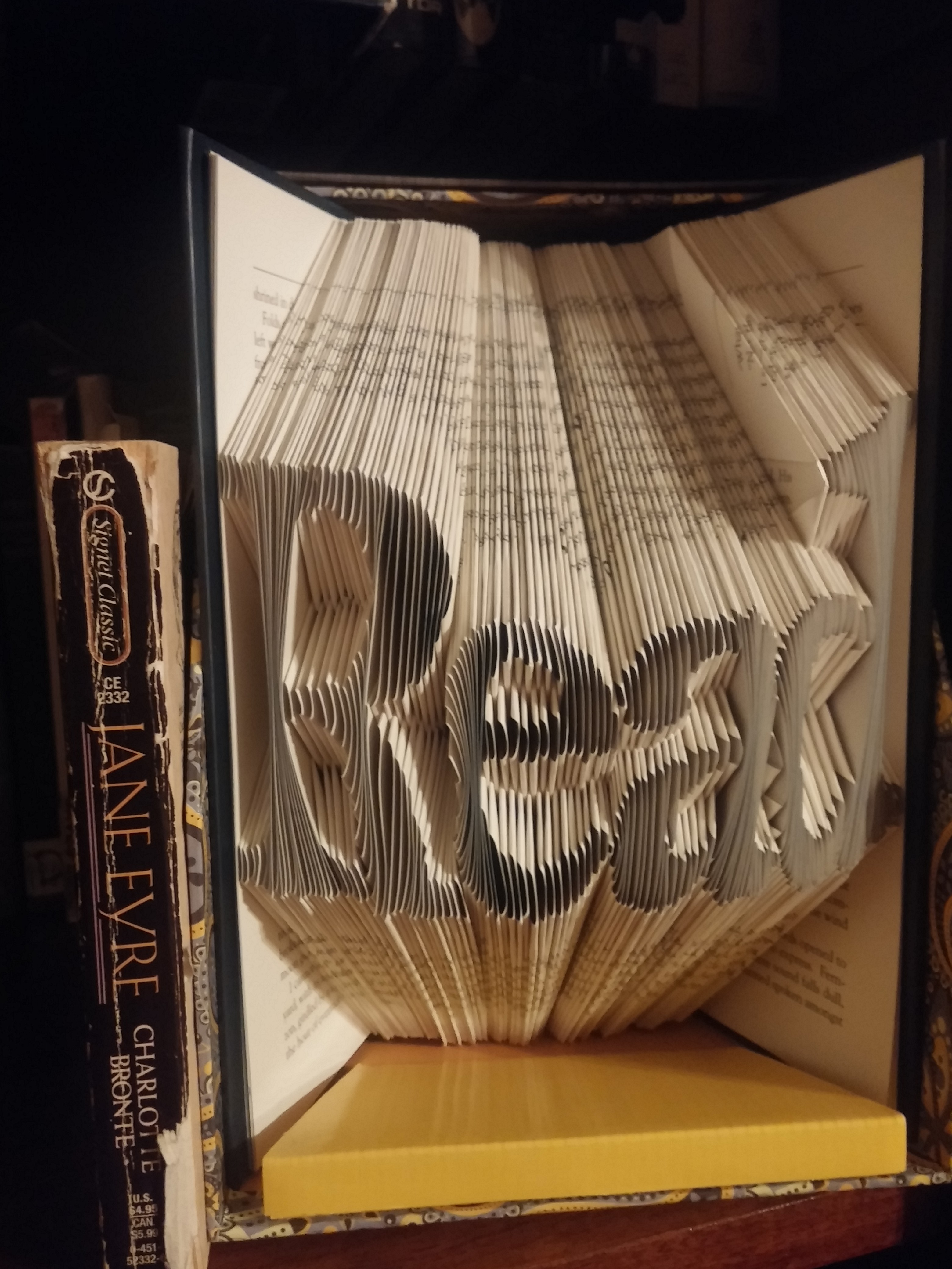
Jane Eyre by Charlotte Bronte.  Yes, the book sculpture is a copy of Jane Eyre!  Next to it is my old beat up edition.  I have 2 other versions of this book. It will always be an important one for me.

Find a Book with a Key on it:

Locke&Key123

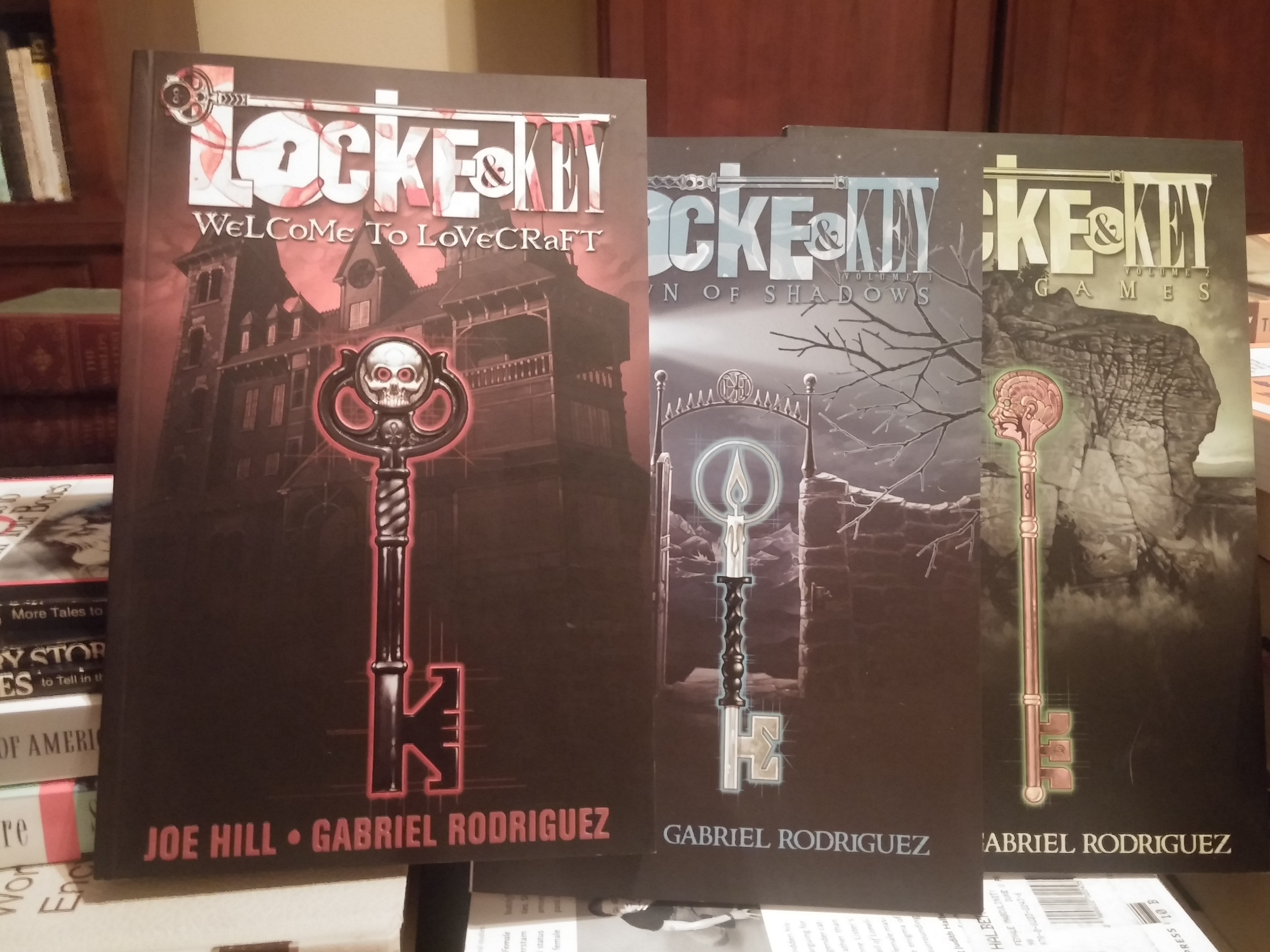
This one felt like cheating since I have 1-3 of Joe Hill & Gabriel Rodriguez’s Locke & Key.  I’m currently rereading book one, so I may finally tackle the other two.  Aren’t you proud Annie?

Find something on your bookshelf that is not a book:

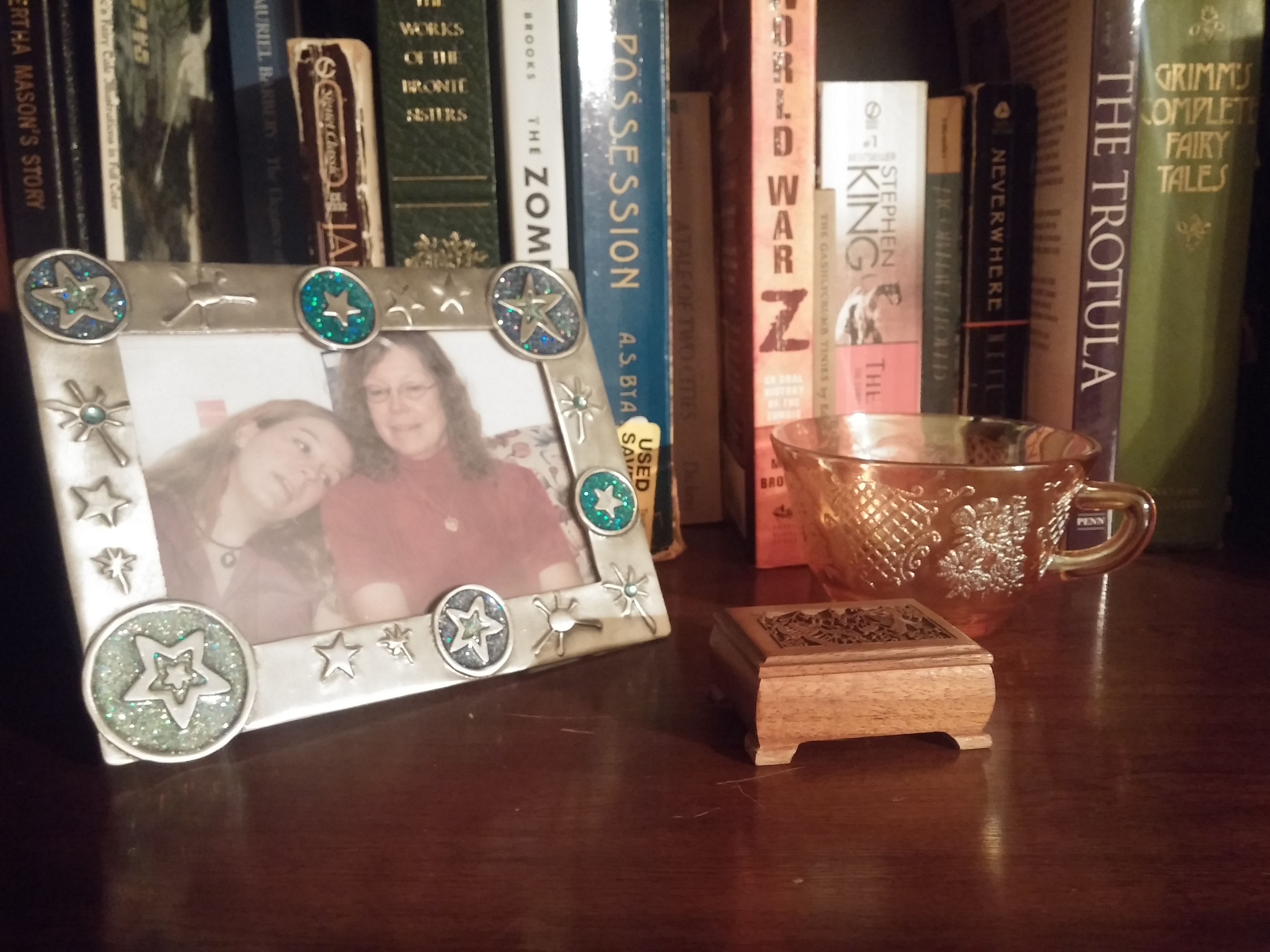
ShelfDecor

I have several things that aren’t books, but I will always love this picture of me and my mom, the music box from my Babushka, and a simple tea cup from Cortney’s bridal shower.

Find the oldest book on your shelf:

Fruit GatheringSo I went with the physically oldest book I own. This edition of Fruit Gathering by Rabindranath Tagore is from 1916.  It was a gift for my graduation from Graduate School from one of my professors, Dr. Delmonico, who continues to be one of my closest and greatest mentors.

Find a book with a girl on the cover:

CharlotteDoyle

I fell in love with The True Confessions of Charlotte Doyle by Avi back in 5th grade. It remains one of my favorite stories, and yes, I also have multiple copies of this one (since the cover is falling off of the original).

Find a book with a boy on the cover:

OysterBoy

The Melancholy Death of Oyster Boy & Other Stories by Tim Burton. Dark, short, and sweet!

Find a book with an animal in it:

Ishmael

Ishmael by Daniel Quinn should be required reading. It is narrated by a gorilla, and it is DEEP.

Find a book with a male protagonist:

AmericanGods

American Gods by Neil Gaiman. Not my favorite Gaiman text, but still great!

Find a book with only words on the cover:

Ariel

Ariel a book of poems by Sylvia Plath.  I didn’t think I’d find a book with only words on the cover, but I actually found THREE!

Find a book with illustrations in it:

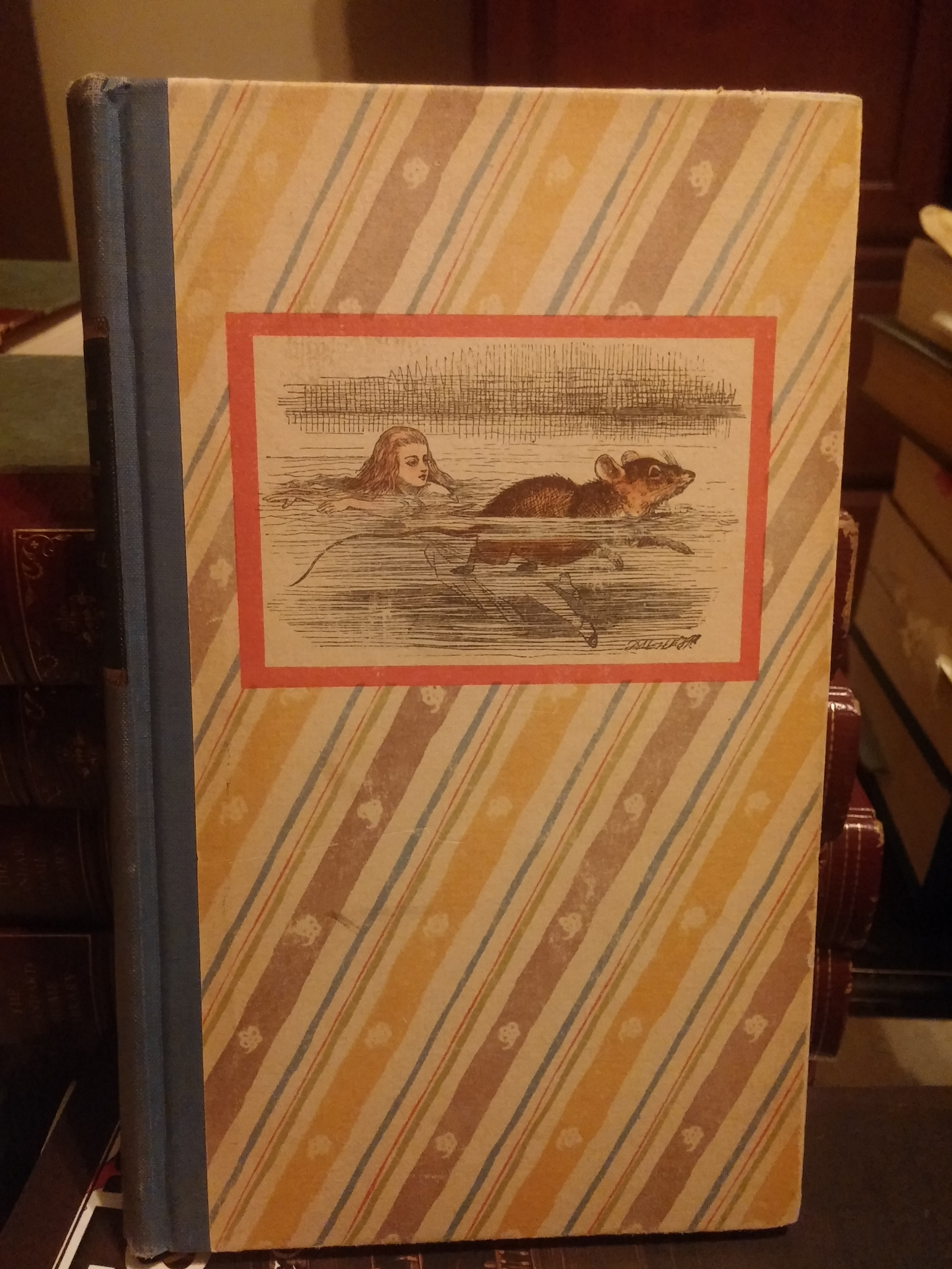
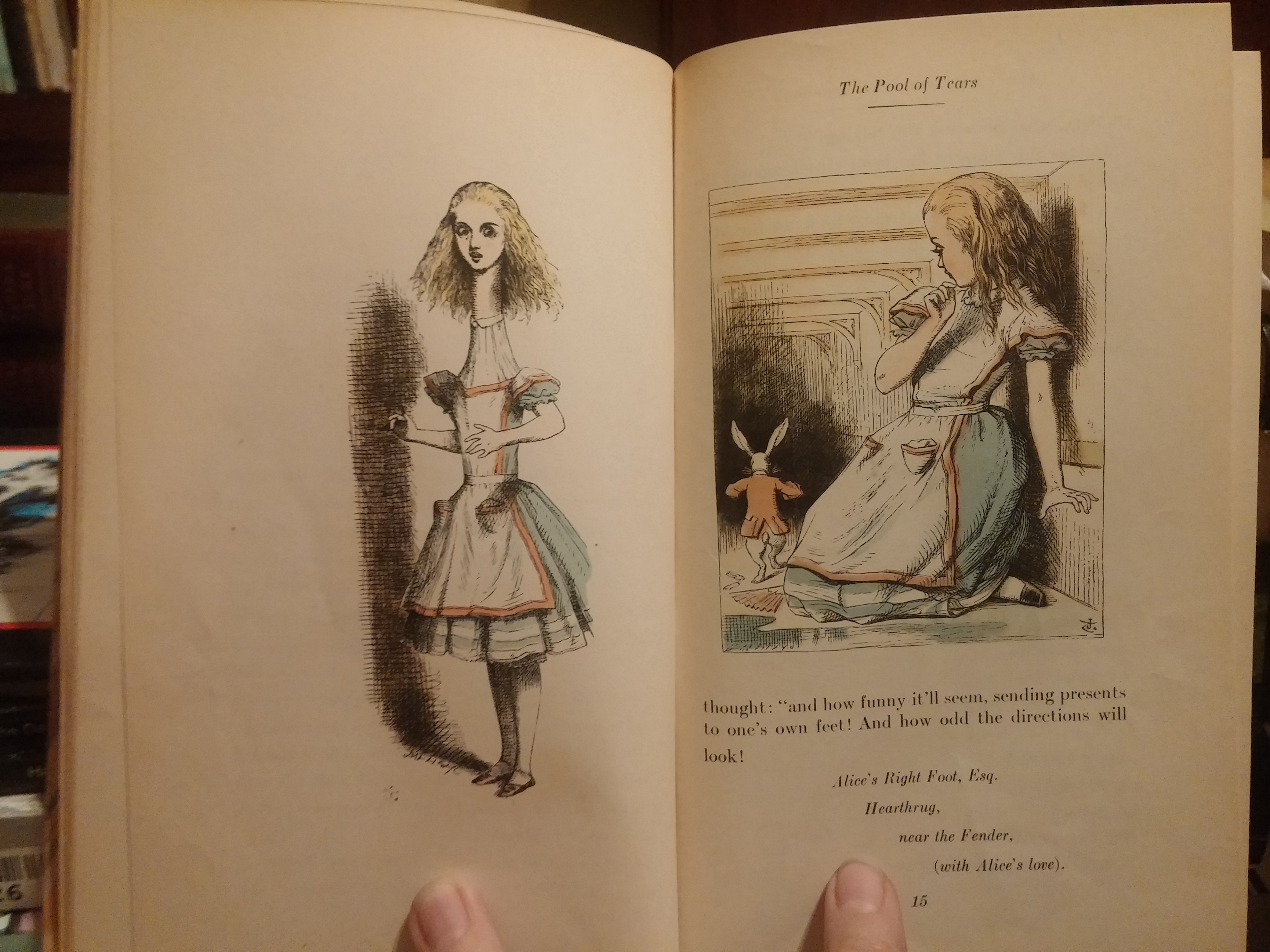
AliceInWonderland AliceIllustrations

Lewis Carroll’s Alice in Wonderland, a 1946 edition with original illustrations. I LOVE the creepiness of the long-necked Alice!

Find a book with Gold Lettering:

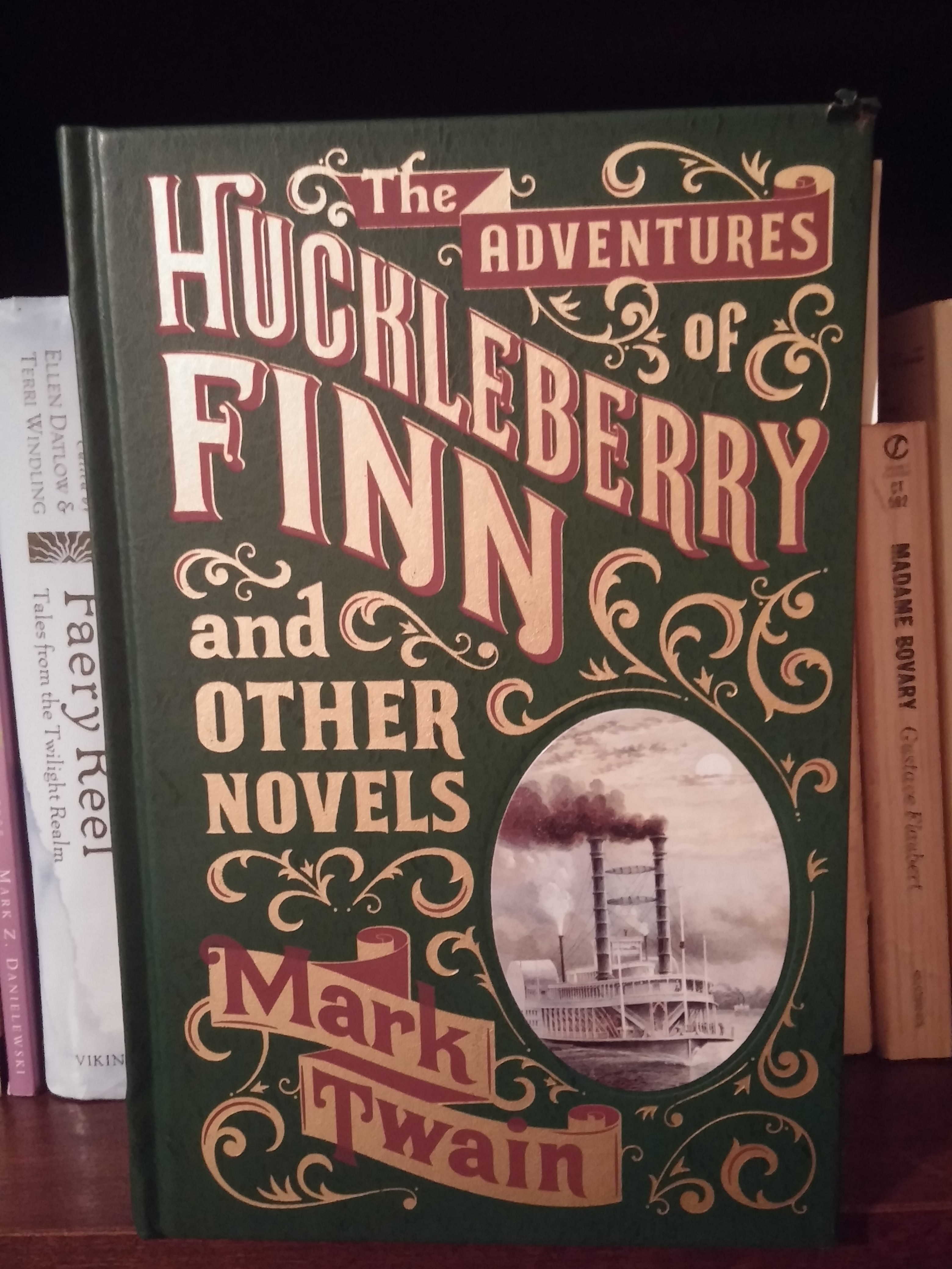
HuckleberryFinn

My THIRD copy of Huckleberry Finn.

Find a diary (true or fictional):

SylviaPlath

The Unabridged Journals of Sylvia Plath.  I may have a slight obsession with Plath.

A Book written by someone with a common name (like Smith):

AssholesATheory

James is fairly common!  Plus, I get the joy of sharing this beautiful title: Assholes: A Theory.

Find a book that has a close up of an object on it:

Graceling

Graceling by Kristine Cashore is a great first book in a beautiful trilogy. I HIGHLY recommend it, especially if you want strong female characters and an uncommon take on the normal terms of YA romance.

Find a book on the shelf that takes place in the earliest time period:

Gilgamesh

I scoured my shelves, with several set in Roman times, unspecified religious historical periods etc. However, Gilgamesh pretty much trumps all.

Find a hardcover book without a jacket:

SenseAndSensibility

Can’t go wrong with Sense and Sensibility by Jane Austen!

Find a teal/turquoise coloured book:

AlvarezAndTolstoy

Do these count? This was difficult! Lots of blues, but few I’d count as teal/turquoise.

Find a book with stars on it:

SisterEmilysLIghtship

Might be difficult to tell, but there is a galaxy scattered across the cover of Jane Yolen’s Sister Emily’s Lightship. A wonderful collection from one of my favorite authors!

Find a non-YA book:

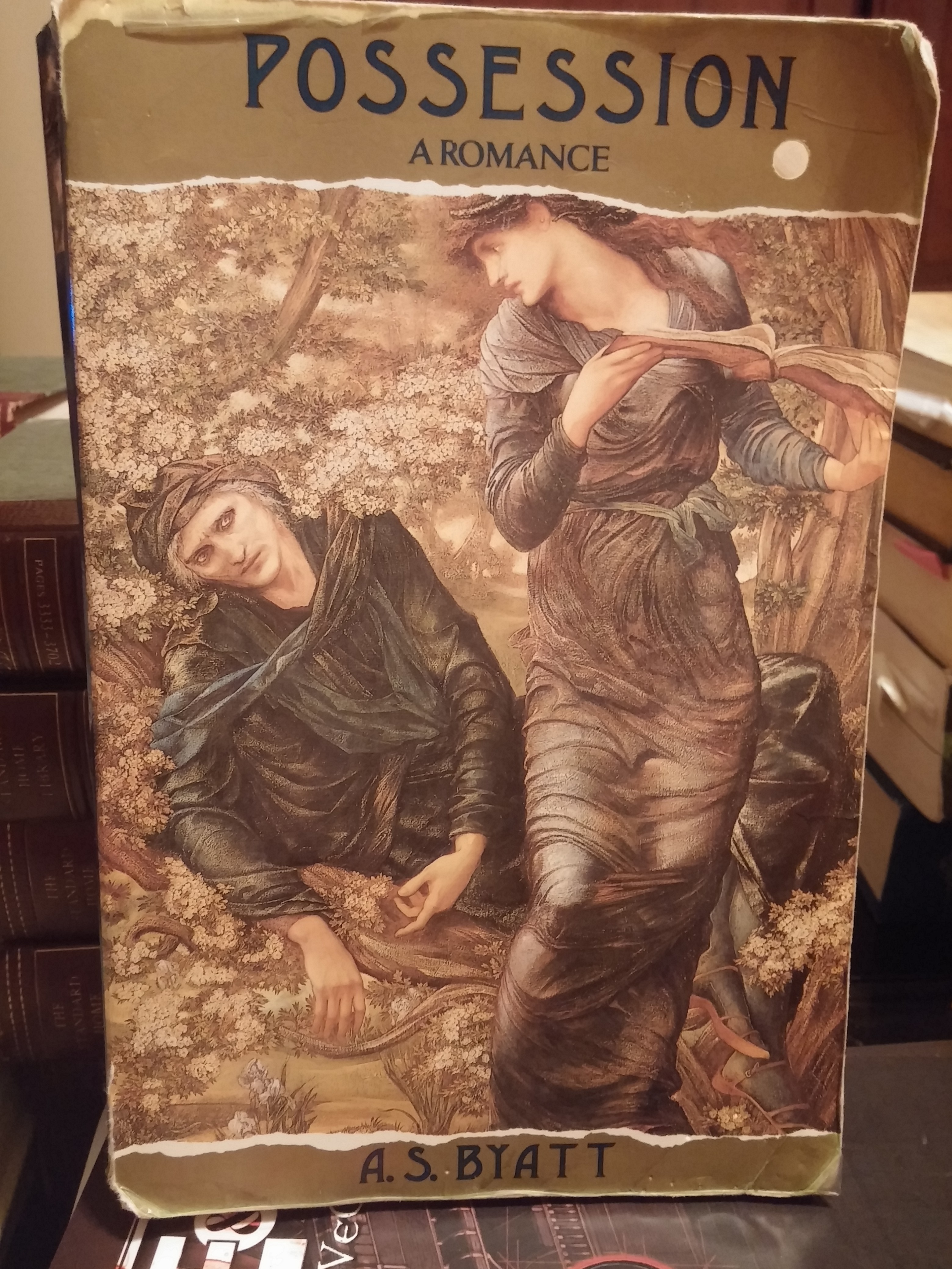
Possession

Another one of my favorites, and definitely not YA.  Possession: A Romance by A.S. Byatt is a beautiful literary homage.

Find the longest book you own:

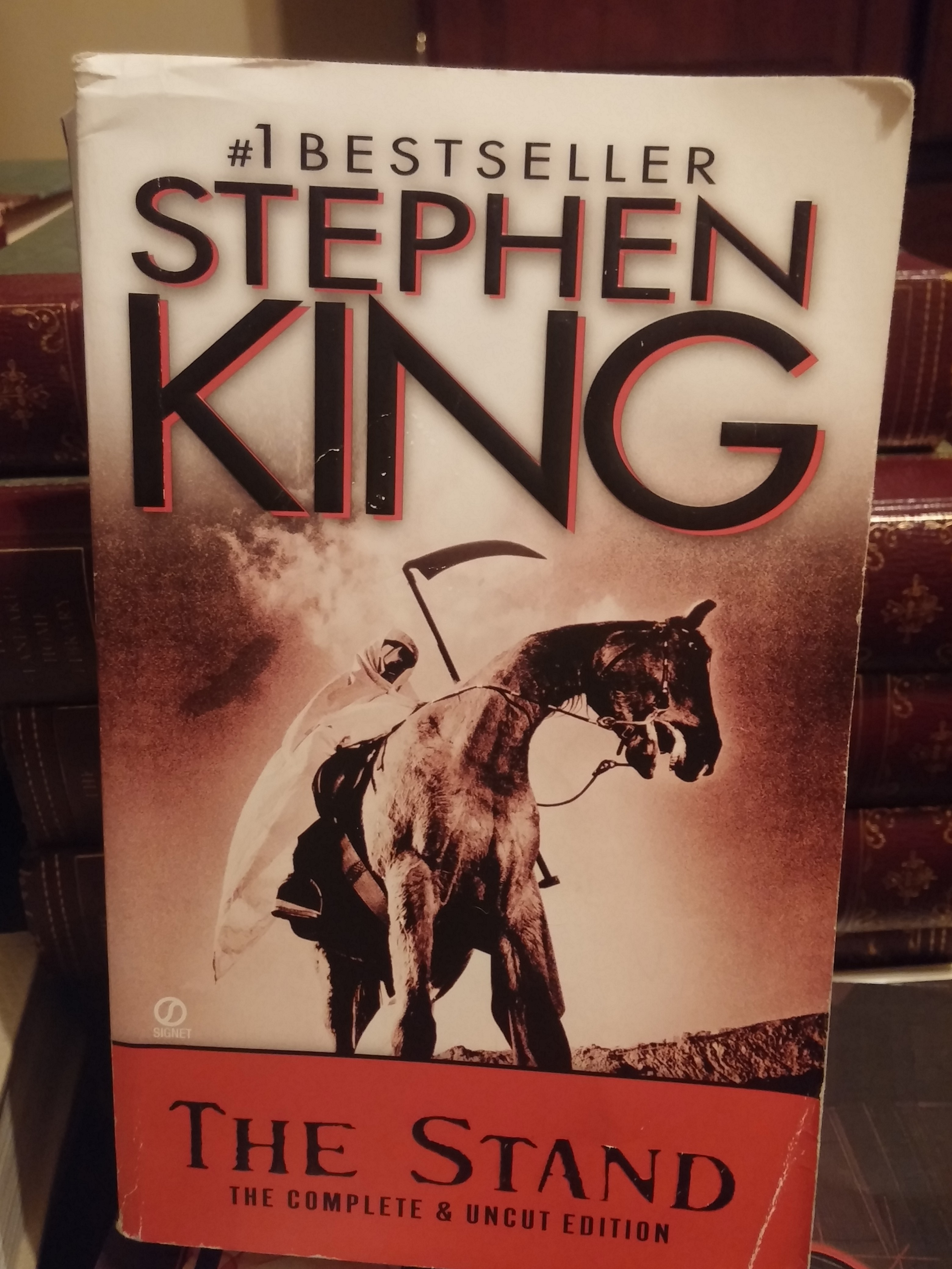
WesternLit TheStand

I went with two options here. First is The Norton Anthology of Western Literature topping out at 2660 pages.  But, I thought it only fair to find my longest continual story (not an anthology or text book), so I’ve included Stephen King’s The Stand which has 1141 pages!

Find the shortest book you own:

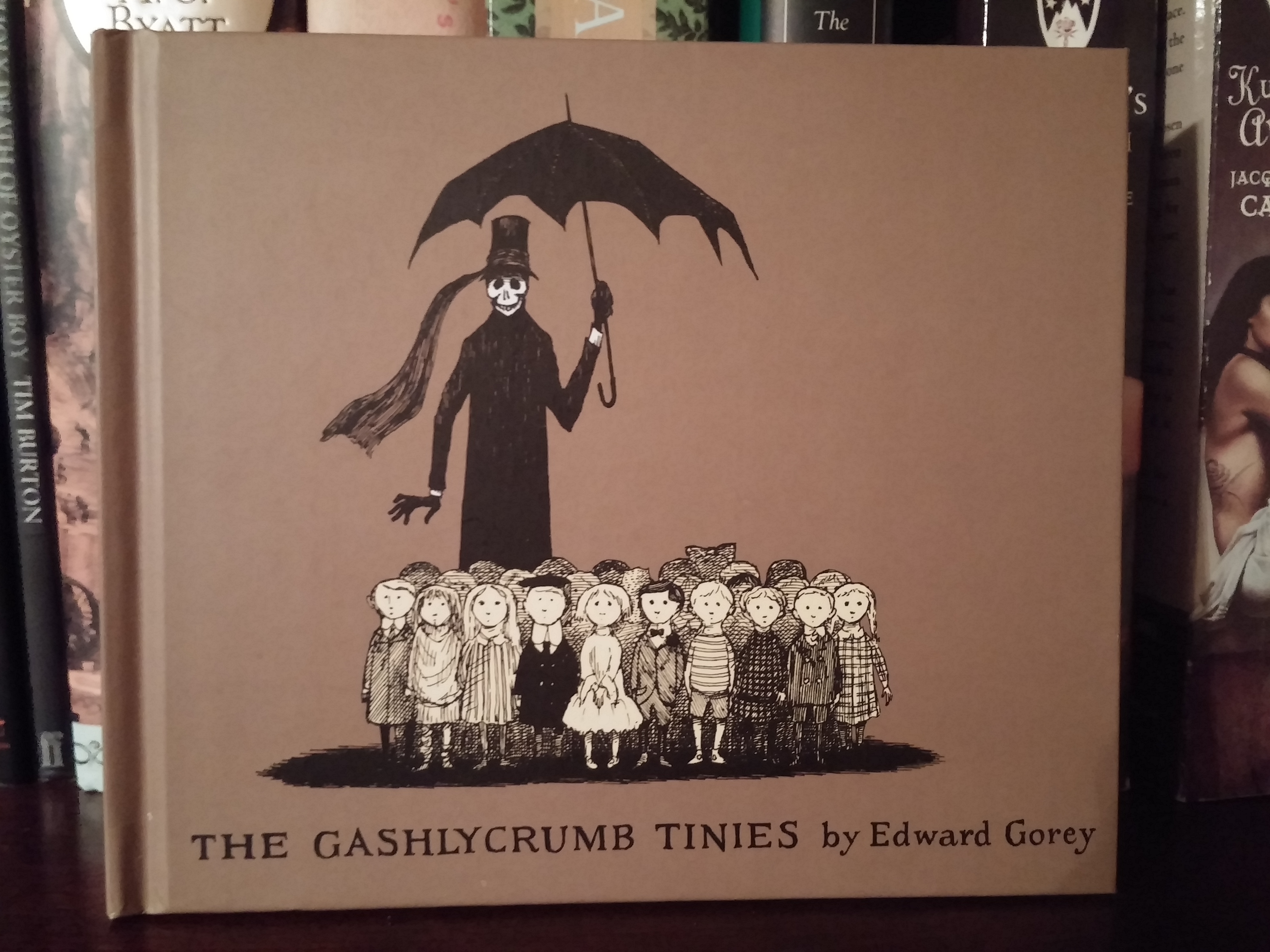
GashlyCrumbTinies

The Gashlycrumb Tinies by Edward Gorey. I’m not sure if it truly is the shortest, but it is certainly one of them.

Find a book with multiple POVs:

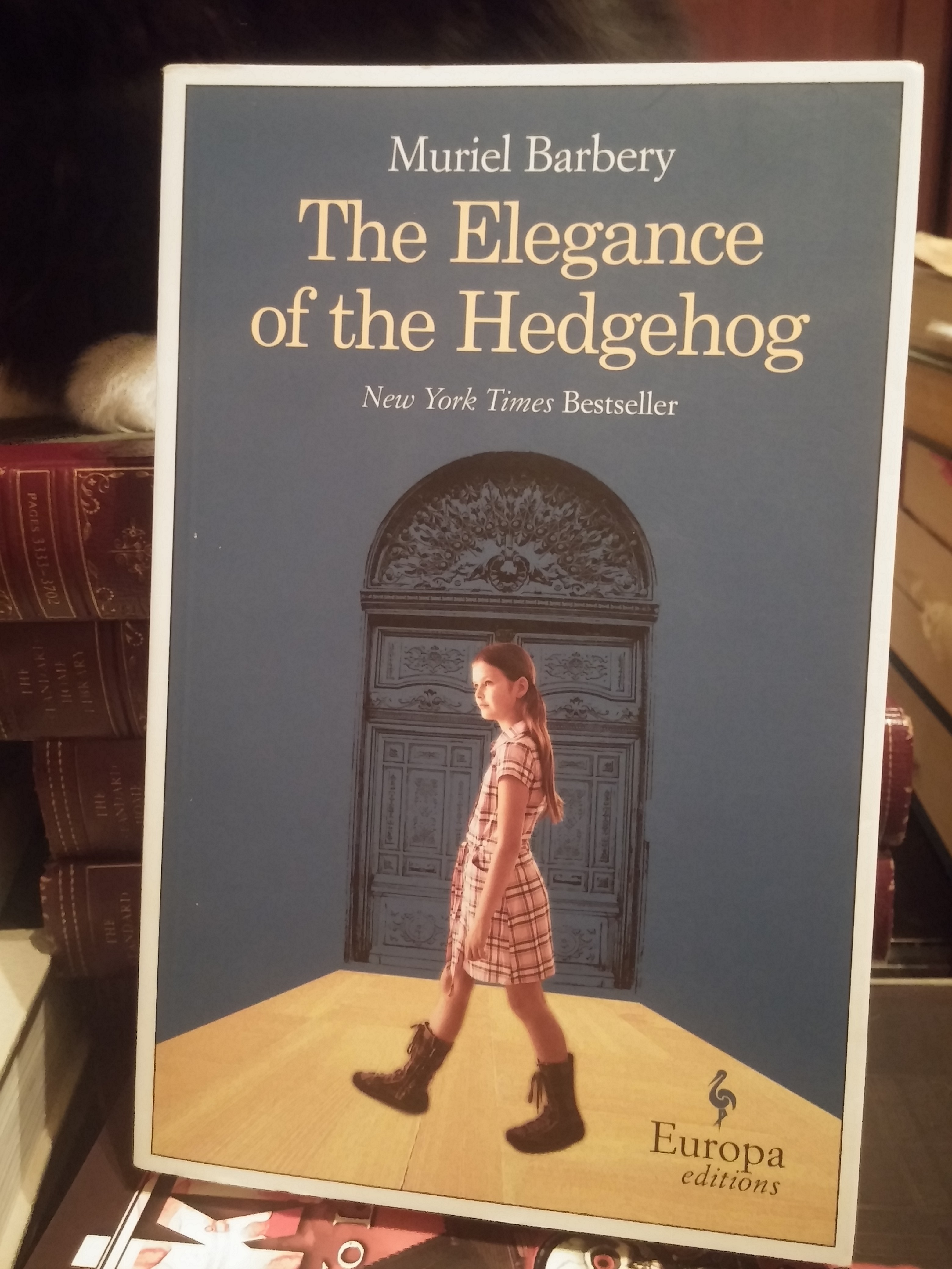
EleganceOfTheHedgehog

Another tough one to decipher. Does it need to be in multiple voices? Can it be just focused on multiple characters?  I went with one that has a shared narrator but focuses independently on two separate characters. It also has some of the most beautiful language.  The Elegance of the Hedgehog by Muriel Barbery.

Find a shiny book:

CompleteDeath

Really, I could have picked several, but I went with Neil Gaiman’s The Absolute Death, a collection of all the Death stories from Sandman.

Find a book with flowers on it:

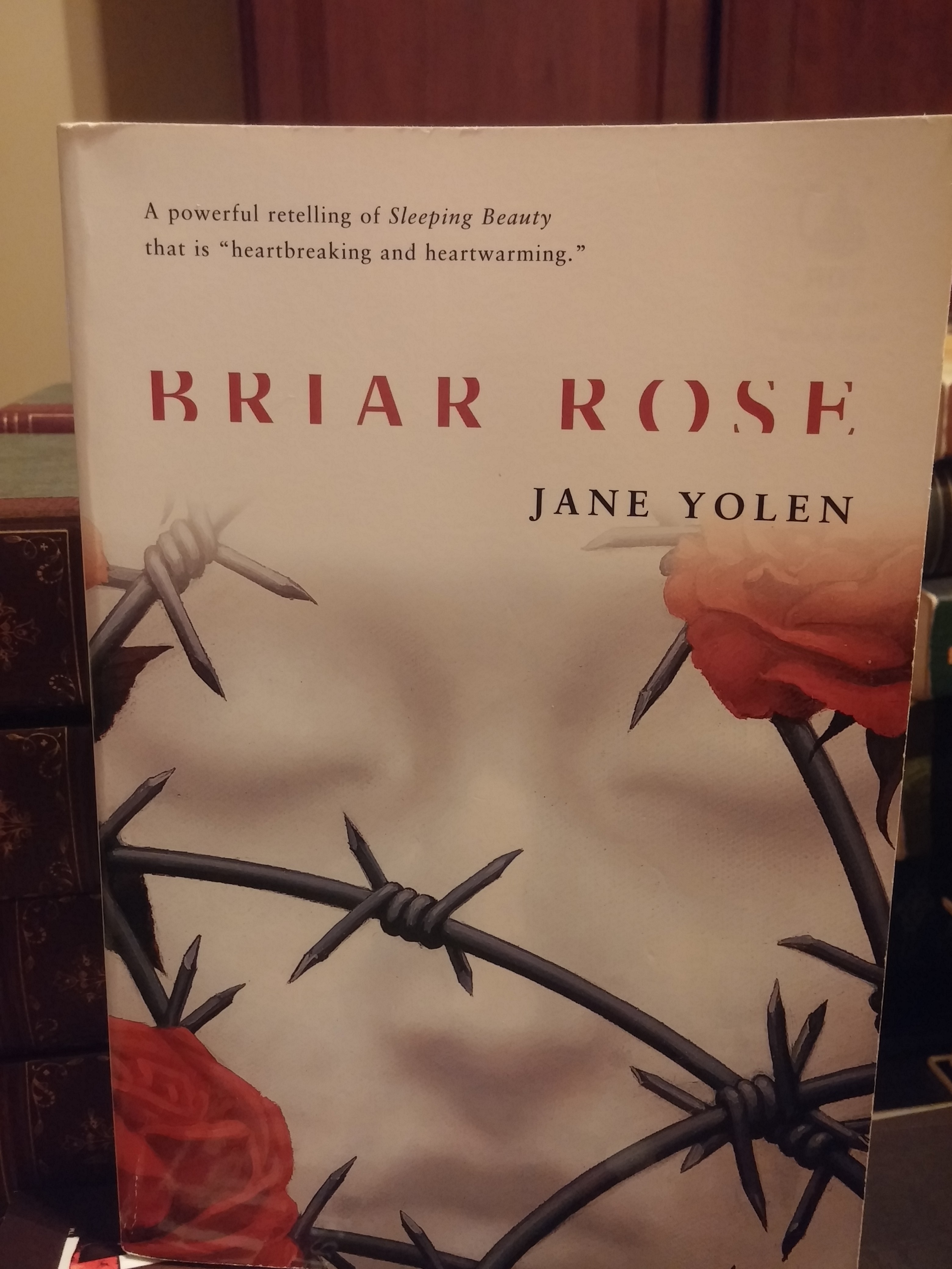
BriarRose

Easy.  Briar Rose by Jane Yolen.

I find myself wanting to add more to the hunt. Perhaps I’ll create another one sometime, just because I can!

How to Prevent the Kitteh Revolution Through the Power of Books!

We all know the Kitteh Revolution is inevitable.  However, there are many steps we can take, as pet owners and book lovers, to deter the uprising for as long as possible.  Use these simple steps to help make your home a revolution free home!

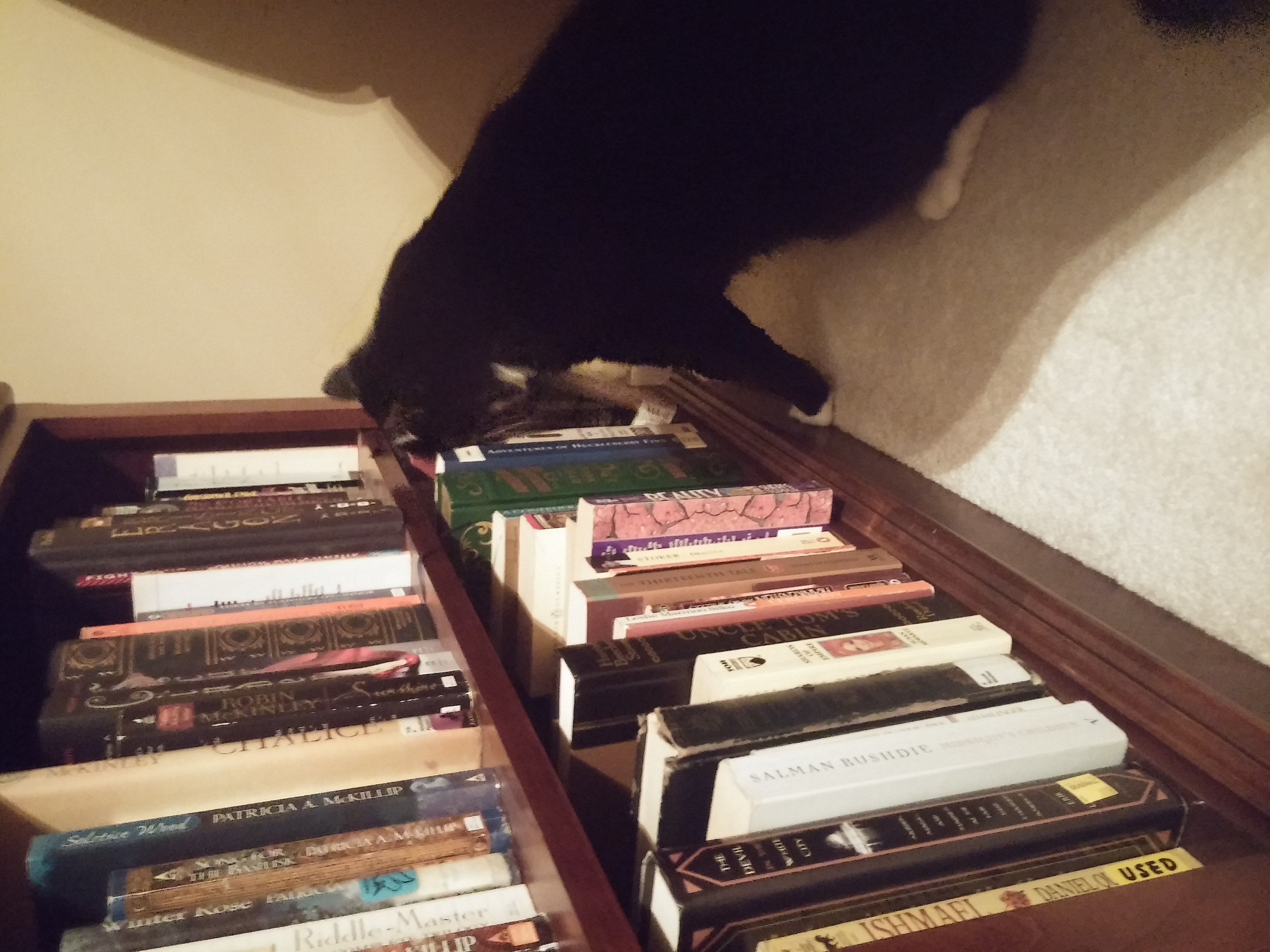
When arranging one’s library, provide your kitties with access to their own books.  Low shelves stacked with several “cat-appropriate” materials are best.  Mysteries and classics are safe choices.  Korben has a preference for Twain.

wpid-wp-1421636988616.jpeg

“Yes, Huckleberry Finn is a good choice.”

Avoid books with dogs/wolves or really any “non-cat” animals and romances.   Tales about revolution are best kept on the high shelves (wouldn’t want them to get any ideas).

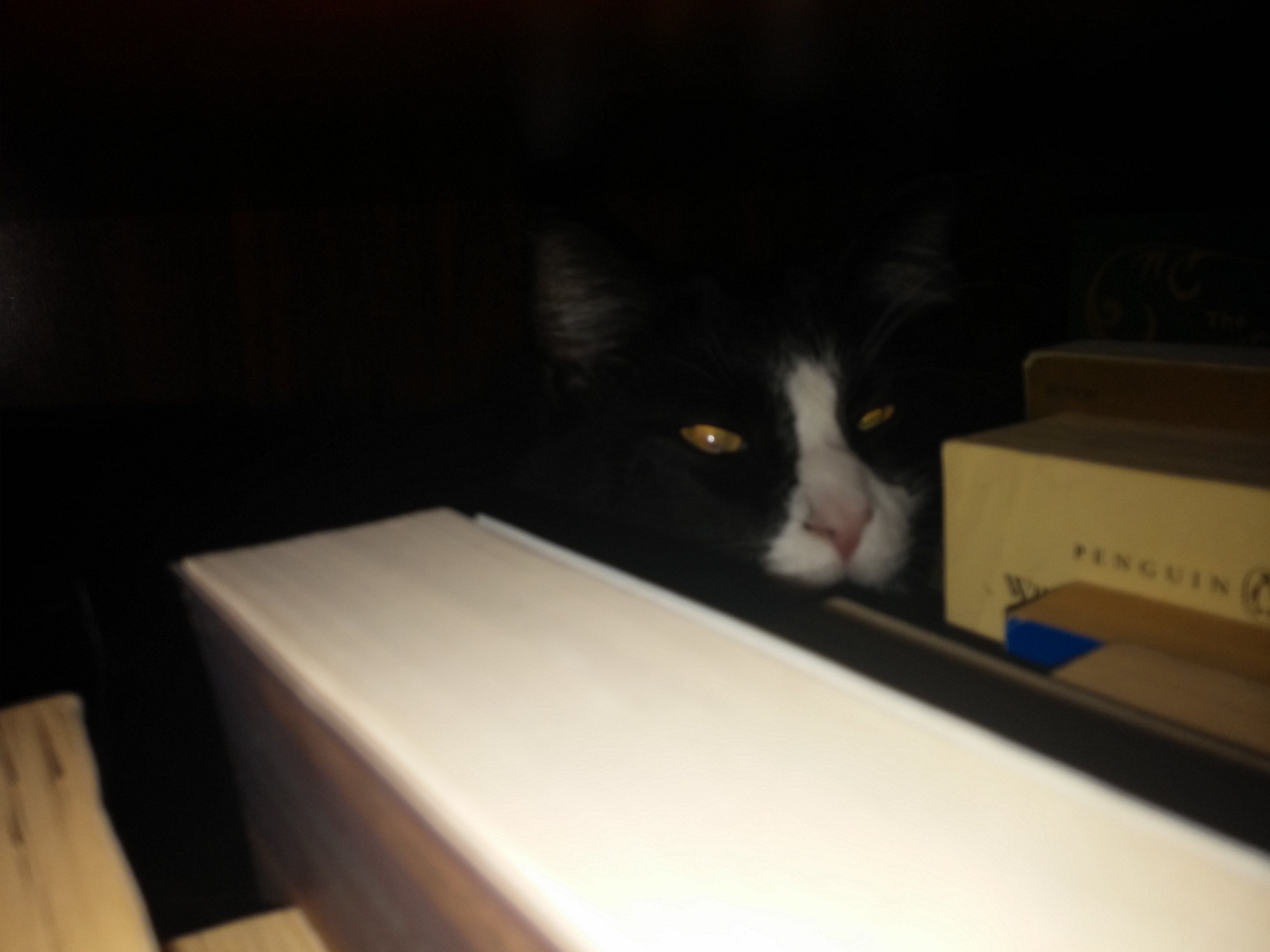
Low, deep shelves are also important to provide comfortable reading napping spaces.  If you find books on the floor by the low shelves, leave them.  Replacing the “secret entrance” to said reading space will only outrage your cat, creating library chaos and leading us closer to the revolution.

wpid-wp-1421636997110.jpeg

“That part on the river just got really…really…slow…” *yawn*

If you have a blanket, or three, leave them scattered in the library.  Even if you don’t own any, go buy some!  We want to keep kitties happy to prevent destroyed books as well as our future well being. Fuzzy blankets are a great tool at keeping your fluffy companion docile.  An open book on or near the blanket is a even better option for a feline pillow.

IMG_20140123_220827_596

“Ah, a comfy choice. Yes human, you shall be spared when the uprising begins”

If your kitteh decides to use any book you may have open, and I do mean ANY, recognize the action for what it is:

A formal threat, gauging your reaction in order to decide your eventual fate.

RexxarBook

“What are you going read now, Human?”

Your choices are:

  1. Leave book and cat for as long as he/she desires. No use in trying to read around a fat furry blob.
    1. The neutral option.
  2. Submit to cat’s requests for attention via petting, belly rubs (only the allotted magical 3 rubs), or clawing time.
    1. This will earn you positive feedback and help insure your survival.
  3. Pull the book away or shove the cat off your precious reading material.
    1. Hint: DON’T CHOOSE THIS OPTION IF YOU WANT TO LIVE!

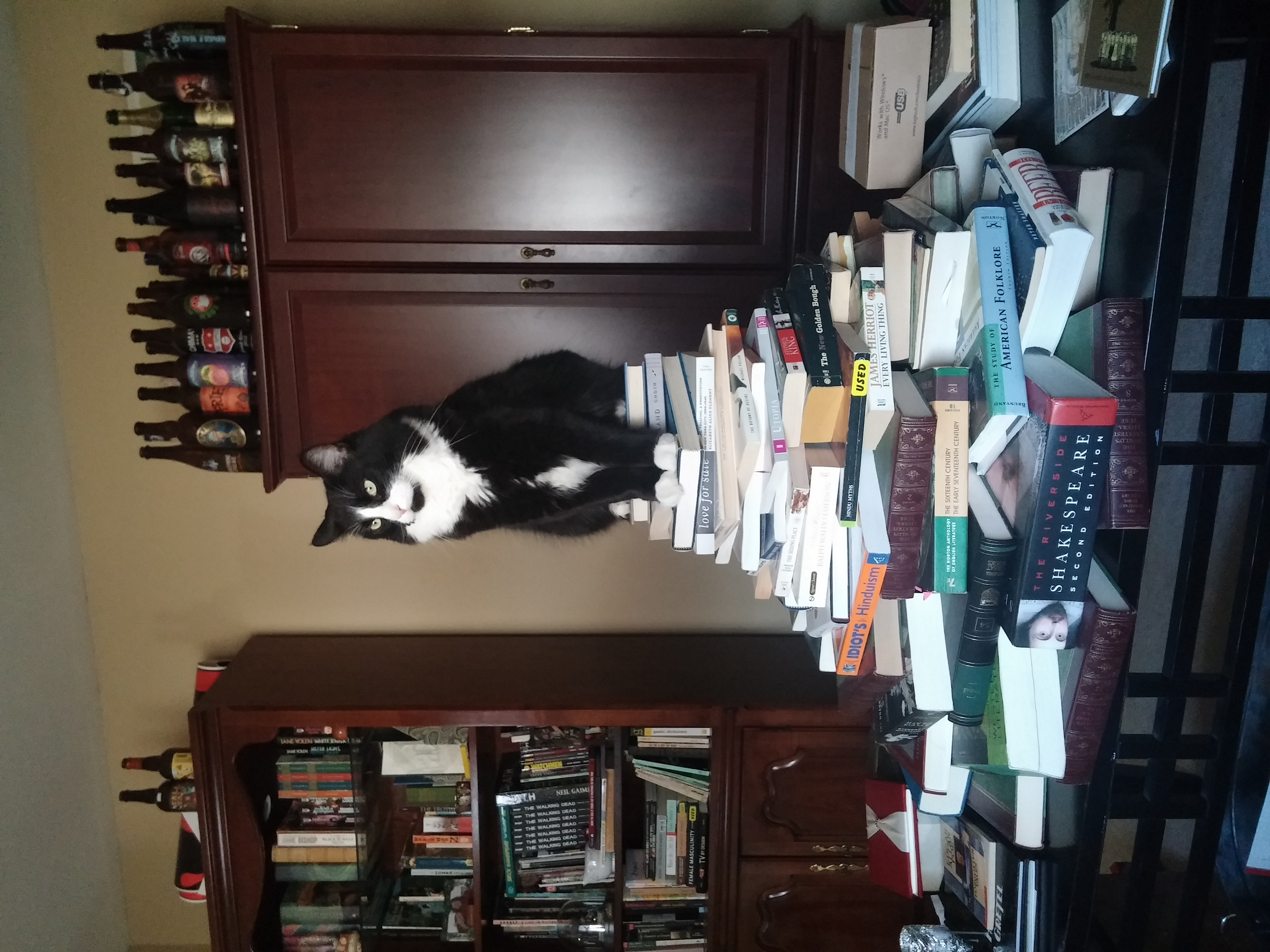
If you want to go out of your way to provide a happy, revolution free space for your cats while utilizing your books to their ultimate ability, you can create the Literati-Kitty’s dream playground through various piles, towers, nap spots, etc.

wpid-wp-1421637019800.jpeg

“King.Of.Everything.”

Remember, a happy cat who thinks he’s in charge is one less who will join up when the rebels come calling!  So my friends, use the power of literature to keep your kittens content! Only we together have the power to prevent the Kitteh Revolution!!

Welcome to 2015 and my new literary journey.

The start of the new year means it is time to do something new with our lives, right?  Usually we’re awash in New Year’s resolutions of getting fit, conquering goals, and moving forward.  Every year we make these goals, even though we know a good portion of them may never be fulfilled, but that does not necessarily mean it is all an exercise in futility.  Instead, it is a chance to really reflect on our motivation, to prioritize our regrets, and understand, if even for a moment, that we can do more. It doesn’t hurt to create, to discover, to try to put some of that feel-good positive energy back into our surroundings. After all, we are all part of this great big world-wide community called humanity and we might as well treat each other like one big extended family, and that means sharing…which brings me to my goal for this year.

Last winter I made ONE resolution, to get back to my literary roots.  As a book nerd, English major, and day dreamer, reading is one of my favorite past times. As with everything though, it inevitably waxes and wanes, and I desperately wanted to bring reading back to the forefront in my life.  After the failed PhD attempt and horrendous experience with the literature review, reading was just work and stress.  Last year, I took it back.

For 2014, I made it my goal to read an average of 3 books per month, or 36 books for the year.  This could include graphic novels, poetry books, plays, young adult, audio, e-books, physical “adult” books, etc…I allowed myself no more than 1 reread per month–difficult for someone who treats my core books like comfort food.  I tracked all of these through short journal entries in a diary.  What may seem to some as me “forcing” myself into these pages, it really just gave me a tangible goal, one in which I could sit down and reflect on the books and all my thoughts.  What started as an attempt to get myself reading, turned into an exercise in analysis, critical thinking, and inner dialogue.

In the end, I made it through 37 books throughout the year, an encouraging success I now wish to continue and expand upon with the help of this blog and a few very encouraging friends!  For 2015, my new goal is to make it through an average of 4 books per month, or 48 books throughout the year.  Instead of documenting it in short snippets for myself, I want to expand my analysis and encourage dialogue with friends, strangers, whomever really.  You see, besides reading and analysis, I’ve missed writing, and engaging in literary discussions on a regular basis. This blog can serve as the discussion and writing baseline.  I’ll also be doing a small book club with some friends, and I wouldn’t be surprised if some of those discussions made it into this space as well.  Plus with my million-and-one hobbies of making yarn, baking, cooking, and making soap, this blog will probably step outside the literary on occasion, which really isn’t so bad.

And so, HERE WE ARE!  Welcome to 2015! Let’s do this!

BookTree2014